Complete Geometry Dash Levels List (Easy to Demon) – Full Beginner Guide
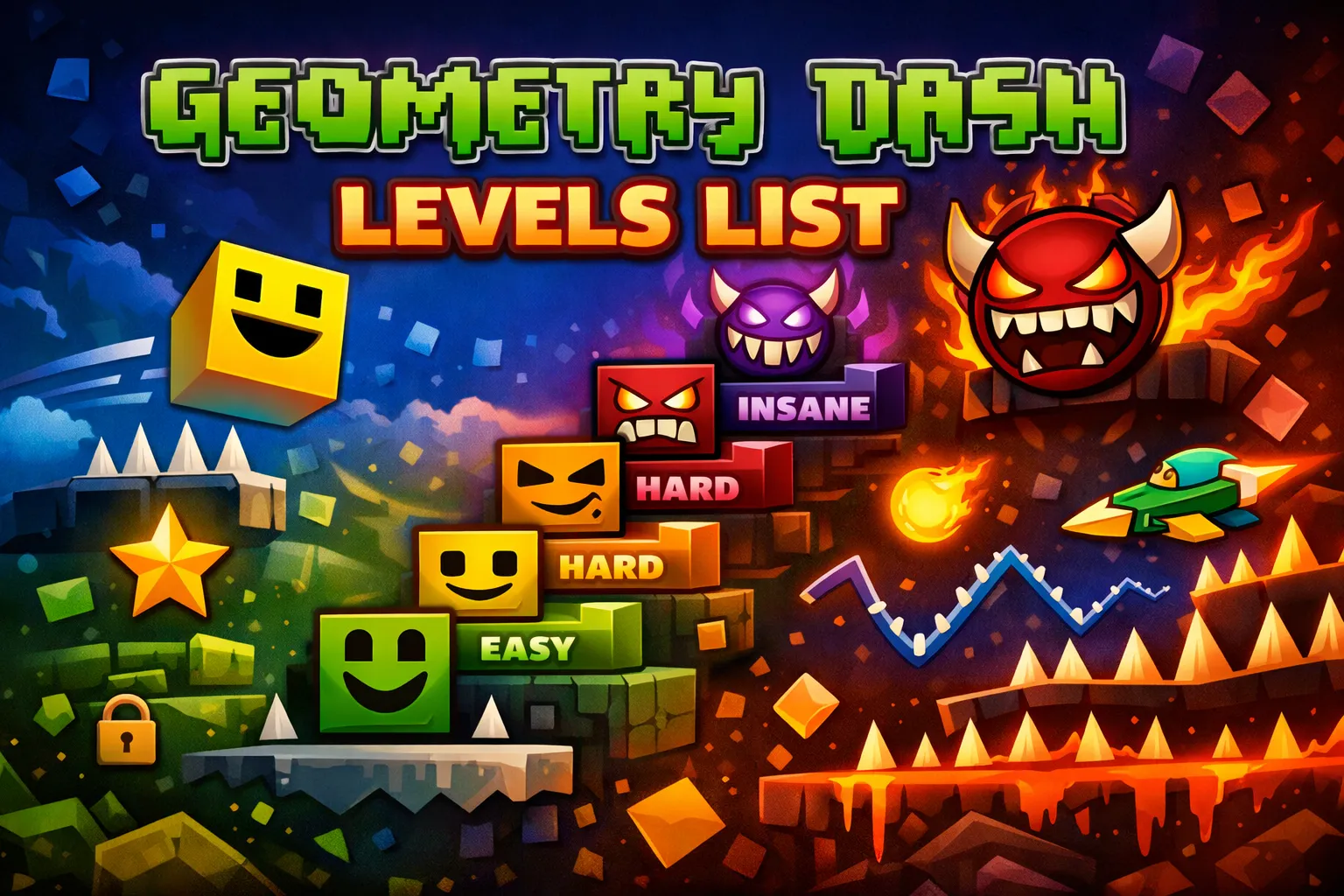
Geometry Dash Levels List
Struggling to understand all Geometry Dash levels? You’re not alone. Many players feel confused when they see so many level names and difficulties. This guide will make everything simple and clear.
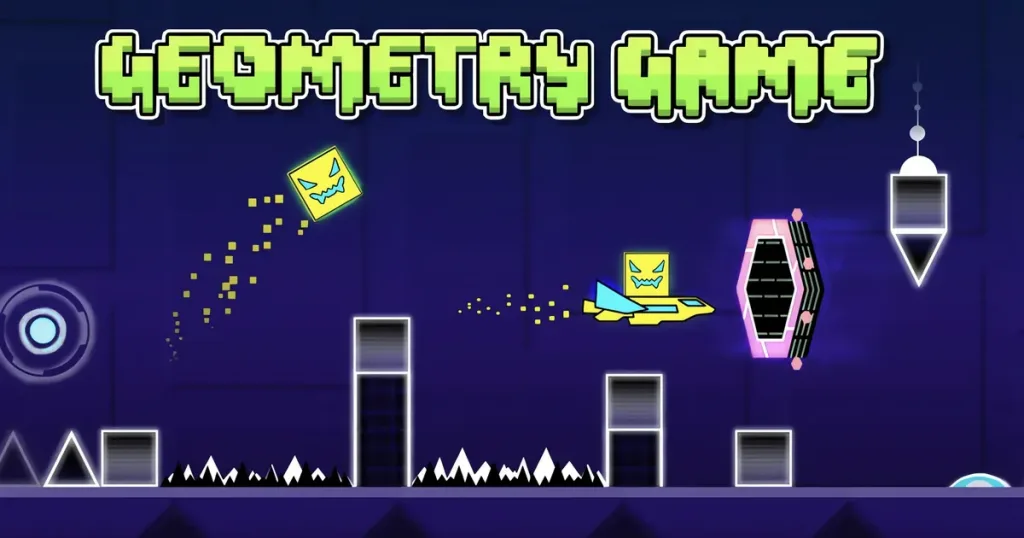
Geometry Dash is a rhythm-based platform game where you control a small cube and guide it through different levels. At first, the game feels very simple. You tap to jump, avoid spikes, and move forward with the music. But as you continue playing, things quickly become more difficult.
After completing a few levels, many players start to feel confused. They see many level names, different difficulty types, and even Demon levels that look impossible. At this point, most players search for a Geometry Dash levels list to understand how the game is structured.
The main reason behind this search is simple. Players want a clear order. They want to know which levels come first, which ones are harder, and how they should progress without getting stuck.
Without a proper guide, it is easy to jump into levels that are too hard. This leads to frustration and sometimes even quitting the game. That is why having a clear and simple explanation is very important, especially for beginners.
Another reason players look for a level list is to set goals. For example, some players want to reach Demon levels, while others just want to complete all official levels. Having a list helps them track progress and stay motivated.
In this guide, you will learn everything step by step. We will go through all Geometry Dash levels in order, explain their difficulty, and show you how to improve without feeling lost.
If you are just starting, you can also read our Geometry Dash beginner guide to understand the basic gameplay and controls.
What Are Geometry Dash Levels?
Geometry Dash levels are the stages you play in the game. Each level is designed with its own layout, music, and obstacles. Your goal is always the same. Reach the end without crashing into spikes or falling.
At the beginning, levels are slow and easy. You get enough time to react and understand what is happening. But as you move forward, levels become faster and more complex.
Each level also introduces new mechanics. For example, some levels include gravity changes, flying sections, or speed boosts. These changes keep the gameplay fresh and challenging.
As you play more levels, you start noticing patterns. Some jumps repeat, and some obstacle styles come back in different forms. Learning these patterns is an important part of improving.
Official Levels vs Custom Levels
There are two main types of levels in Geometry Dash, and understanding them helps you learn faster.
Official Levels
These are created by the game developer. They follow a proper order from Easy to Demon. Each level prepares you for the next one.
For example, Easy levels teach basic jumping. Hard levels introduce timing and memory. Demon levels test everything you have learned.
Because of this structure, official levels are the best place to start for beginners. Another important thing about official levels is balance. They are designed in a way that feels fair. Even when they are difficult, they are still possible with practice.
Custom Levels
These are created by players from around the world. There are thousands of custom levels, and their difficulty can vary a lot. Some custom levels are easy and fun. But many are extremely difficult, especially Demon levels. These are often harder than official ones.
For example, some custom Demon levels require perfect timing for long periods. One mistake can send you back to the start.
That is why beginners should focus on official levels first. Once you understand the game, you can explore custom levels later.
All Geometry Dash Levels in Order
This is the main part of the guide. Below is the complete geometry dash levels list, grouped by difficulty.
Easy Levels
Easy levels are the starting point for every player. They are designed to help you understand the basic controls and timing.
Some common Easy levels include:
- Stereo Madness
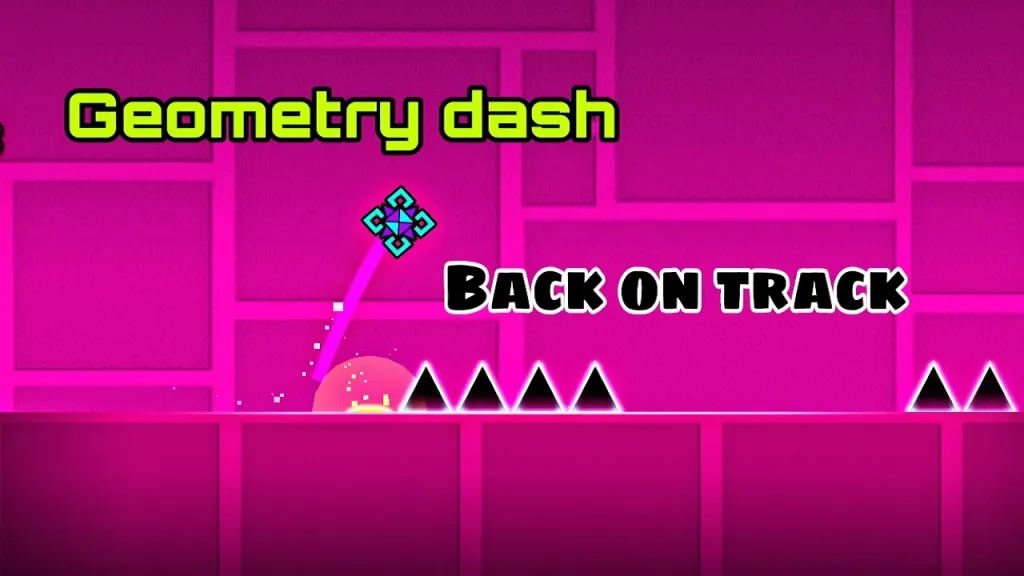
- Back on Track
- Polargeist
These levels move at a slower speed. The jumps are simple, and there is enough space to react.
For example, in Stereo Madness, most obstacles are placed in a predictable way. This helps you learn how to jump at the right time without pressure.
Back on Track introduces slightly faster movement, but still keeps things simple. It helps you improve timing without making the game too hard. Polargeist adds a bit more rhythm-based gameplay. You need to follow the music closely to make correct jumps. Even though they are easy, these levels are very important. They build your foundation. If you rush through them, you may struggle later.
Normal Levels
Normal levels are the next step after Easy. They are still manageable but introduce small challenges.
Examples include:
- Dry Out
- Base After Base
- Cant Let Go
In these levels, you will start seeing gravity changes. This means your cube can move upside down, which may feel confusing at first. Dry Out is a good example. It introduces gravity portals in a simple way so you can understand how they work. Base After Base focuses more on timing. The jumps are slightly tighter, so you need better control. Cant Let Go is where many players start facing difficulty. It includes tricky jump sequences that require focus.
At this stage, failing becomes more common. But this is part of learning. Each mistake helps you understand the level better.
Hard Levels
Hard levels are where the game becomes more serious. You need to pay attention and stay focused.
Examples include:
- Jumper
- Time Machine
- Cycles
These levels introduce more complex patterns. You can no longer rely only on reaction. You must remember what comes next. Jumper increases the speed and introduces tighter spaces. It tests your control. Time Machine is known for its repeated jump patterns. You must memorize them to succeed. Cycles mixes different gameplay elements. It keeps changing the flow, which makes it more challenging.
This is where practice mode becomes very useful. Without practice, these levels can feel frustrating.
Harder Levels
Harder levels increase the challenge even more. They introduce multiple gameplay styles in one level.
Examples include:
- xStep
- Clutterfunk
- Theory of Everything
You will now face different modes like ship, ball, and UFO. Each mode requires a different type of control. xStep mixes cube and ship gameplay. You must quickly adjust between styles. Clutterfunk is one of the most challenging levels in this category. It has fast sections and tight timing. Theory of Everything introduces many mechanics in one level. It prepares you for even harder stages.
These levels test your adaptability. You must quickly adjust to different gameplay styles.
Insane Levels
Insane levels are fast and intense. They require quick reactions and strong control.
Examples include:
- Electroman Adventures
- Hexagon Force
- Electrodynamix
Electroman Adventures is fast but fun. It helps you get used to higher speed. Hexagon Force introduces dual gameplay. You control two cubes at the same time, which can feel confusing.
Electrodynamix is one of the fastest levels. It has sudden speed changes that require instant reaction. The speed increases a lot here. You have less time to react, and the obstacles come quickly. These levels can feel overwhelming at first. But with practice, you will start improving.
Demon Levels
Demon levels are the hardest official levels in Geometry Dash. They are designed for experienced players.
Examples include:
- Clubstep
- Theory of Everything 2
- Deadlocked
Clubstep is often the first Demon level players try. It introduces hidden obstacles and tricky patterns. Theory of Everything 2 is more complex. It includes many gameplay styles and requires strong memory. Deadlocked is very fast and intense. It includes tight spaces and difficult wave sections.
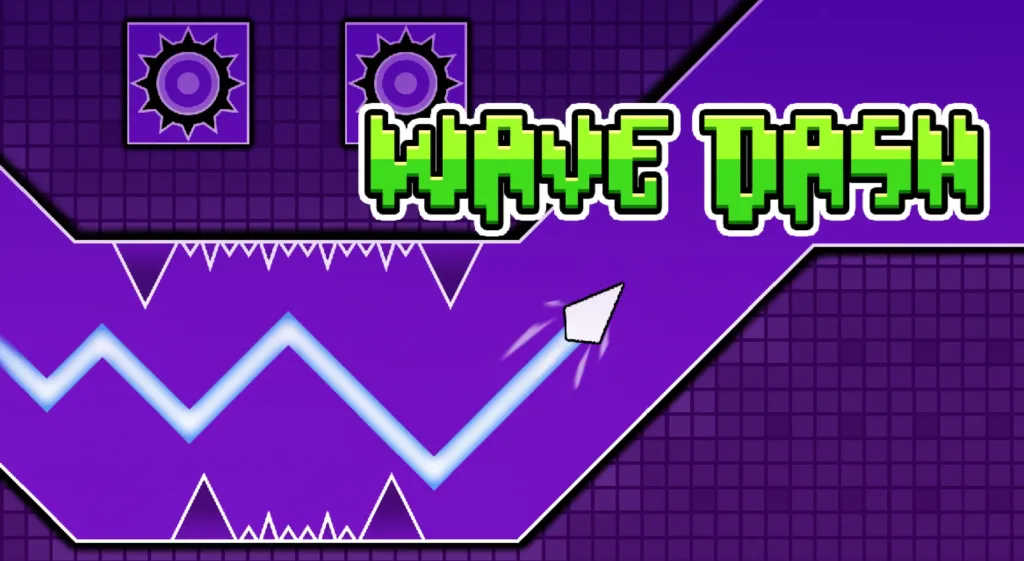
These levels combine everything. Speed, timing, memory, and precision are all required. Completing a Demon level is a big achievement. It shows that you have mastered the basics of the game.
If you want to try more challenging stages, you should explore our detailed Geometry Dash demon levels guide.
Difficulty Levels Explained
Understanding difficulty is very important if you want to improve in Geometry Dash.
Easy
These levels are slow and simple. They help beginners learn basic controls. You get more time to react, which makes learning comfortable.
Normal
These levels add small challenges. You start learning timing and control. Mistakes become more common, but still manageable.
Hard
Speed increases, and patterns become more complex. Memory becomes important. You must start thinking ahead.
Harder
New mechanics are introduced. You must adapt to different gameplay styles like ship and UFO.
Insane
Very fast gameplay. Requires strong focus and quick reactions. Even small mistakes can end your run.
Demon
The highest difficulty. Requires skill, practice, and patience. You must master all mechanics to succeed.
Each step increases the challenge. The game becomes faster, and mistakes become more costly.
Complete Levels Table
| Level Name | Difficulty | Stars | Description |
|---|---|---|---|
| Stereo Madness | Easy | 1 | Basic starting level |
| Back on Track | Easy | 2 | Simple rhythm gameplay |
| Polargeist | Easy | 3 | Introduces timing |
| Dry Out | Normal | 4 | Gravity mechanics |
| Base After Base | Normal | 5 | Improved control |
| Cant Let Go | Normal | 6 | Tight jumps |
| Jumper | Hard | 7 | Faster gameplay |
| Time Machine | Hard | 8 | Pattern-based level |
| Cycles | Hard | 9 | Mixed obstacles |
| xStep | Harder | 10 | Multi-mode gameplay |
| Clutterfunk | Harder | 11 | Complex patterns |
| Theory of Everything | Harder | 12 | Advanced mechanics |
| Electrodynamix | Insane | 12 | High-speed level |
| Clubstep | Demon | 14 | First Demon level |
| Deadlocked | Demon | 15 | Very difficult level |
Tips for Beginners
If you are new to Geometry Dash, it is important to start the right way. First, always begin with Easy levels. Do not skip them, even if they feel too simple. These levels teach you timing and control. Second, use practice mode often. This helps you learn difficult sections step by step.
For example, if you fail at one part again and again, place checkpoints and repeat only that section.
Third, listen to the music. Geometry Dash is a rhythm-based game. The music helps you time your jumps better. Fourth, stay calm. Getting frustrated will only make things harder. Take breaks if needed. Finally, play regularly. Even short sessions can improve your skills over time.
Progression Guide
Improving in Geometry Dash takes time, but there is a clear path you can follow. Start with Easy levels and complete all of them. This builds your confidence. Then move to Normal levels. Focus on timing and understanding new mechanics.
After that, try Hard levels. This is where you start learning patterns and memory. When you reach Harder levels, spend more time practicing. These levels teach advanced skills.
Finally, move to Insane and Demon levels. At this stage, you will need patience and focus. Progress is slow but steady. Every level makes you better.
Common Mistakes
Many beginners make simple mistakes that slow their progress. One common mistake is skipping levels. Players try harder levels too early and get stuck. Another mistake is not using practice mode. This makes learning slower.
Some players also lose focus during gameplay. Even a small mistake can cause failure. Another mistake is rushing. Players want quick results, but improvement takes time. Avoid these mistakes, and you will improve much faster.
FAQs
What is the full Geometry Dash levels list in order?
The full Geometry Dash levels list starts with Easy levels like Stereo Madness and Back on Track. After that, it moves to Normal, Hard, Harder, and Insane levels. At the end, players reach Demon levels like Deadlocked, which are the most difficult in the game. This order helps players improve step by step without confusion.
How many official levels are in Geometry Dash?
Geometry Dash currently has more than 20 official levels created by the developer. Each level is designed with a specific difficulty, starting from Easy and going all the way to Demon. These levels are made in a way that helps players learn new skills as they progress.
What is the hardest level in Geometry Dash?
The hardest official levels in Geometry Dash are Demon levels such as Deadlocked and Theory of Everything 2. These levels require fast reactions, strong memory, and a lot of practice. For beginners, these levels can feel impossible at first, but they become manageable with time.
Which Geometry Dash level should beginners play first?
Beginners should always start with Easy levels like Stereo Madness and Back on Track. These levels are slow and simple, which makes it easier to learn jumping and timing. Starting here helps build a strong foundation for harder levels later.
What are Demon levels in Geometry Dash?
Demon levels are the highest difficulty levels in the game. They include very fast gameplay, tight spaces, and complex patterns. Players need good control, quick reactions, and patience to complete these levels successfully.
How can I improve in Geometry Dash levels?
You can improve by practicing regularly and using practice mode to learn difficult parts of a level. It also helps to complete levels in order instead of skipping ahead. Over time, your timing and control will get better.
Are custom levels harder than official levels?
Yes, many custom levels are harder than official levels. Some custom Demon levels are extremely difficult and are created for advanced players. Beginners should avoid them until they are comfortable with official levels.
Why is Geometry Dash so difficult?
Geometry Dash becomes difficult because the speed increases and the timing becomes tighter. As you move to higher levels, you get less time to react, which makes the gameplay more challenging. Practice and patience are the key to improving.
Conclusion
Understanding the Geometry Dash levels list gives you a clear direction in the game. Instead of feeling confused, you now know how the levels are structured. Start with Easy levels, practice regularly, and slowly move forward. Do not rush. Every level teaches you something new. With time and patience, even Demon levels will feel possible. Just keep playing and improving. This complete geometry dash levels list helps you understand the game better and improve step by step.